

ThunderCats! Ho! – 40 Years of Action-Packed Feline Adventures

On the 23rd of January in 1985 in the US, children caught their first glimps of Lion-O, the leader of the ThunderCats, a band of feline-humanoid hybrids made up of Tygra, Cheetara, Panthro, Wilykit, Wilykat, and Snarf, who try to protect Third Earth against the sinister Mumm-Ra and his army of mutants. And from that introduction, the number of fans quickly grew and the series went on to last for four years, earning its reputation as a staple in eighties nostalgia, with a series of merchandise to boot.
Forty years later, and it is still a recognisable franchise that resonates with those who grew up in that era of animated shows alongside He-Man and the Masters of the Universe, Transformers, My Little Pony, and The Care Bears. And while many still hold dear the original series, it has been treated to a reboot that garnered a cult following, a comedy series that attempted something different, and an acclaimed, best-selling comic book series created by a couple of brilliantly talented artists.
To celebrate forty years of these feline heroes and their unique sci-fi world, we will look back at the multiple interpretations and adaptations that helped to cement the forty years that made up this lasting legacy. If it wasn’t for the writers, showrunners, and animators who were committed to this property, we may not be celebrating each of these projects of the franchise today.
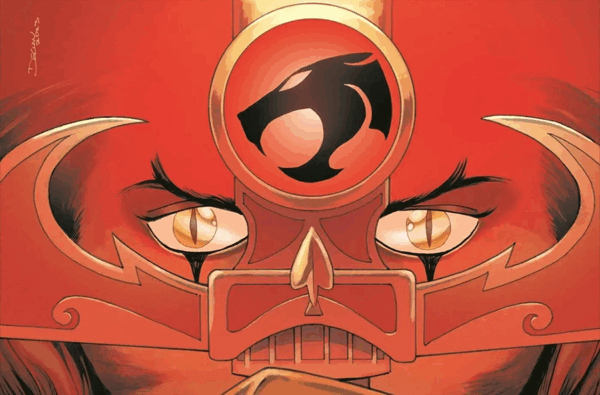
ThunderCats Issue 01 By Dynamite Comics Cover – Image © Dynamite Entertainment / Warner Bros.
ThunderCats – 1985 to 1989
Looking back forty years, just how did the series come into being? And who was responsible for its creation?
The creation of ThunderCats came from the hands of Tobin Wolf (1922 to 1999,) who, prior to the 1980s, was the developer of several toys and board games, even being responsible for the development of a version of the portable record player. One day in 1981, he sketched an early version of what would eventually become Lion-O and the members of the ThunderCats. Once the concept was ready, Wolf pitched it to several companies before approaching Leisure Concepts, a licensing company, and its then-president, Stan Weston.
Intrigued by the idea and potential behind the concept, Weston then pitched the series to Rankin/Bass. Known for their animated projects and popular stop-motion holiday specials throughout the sixties and seventies, such as Rudolph the Red-Nosed Reindeer, Frosty the Snowman, and Santa Claus Is Comin’ To Town, the studios’ founders, Arthur Rankin Jr and Jules Bass, were interested in the show and became their producers. However, for the animation itself, that honour went to Pacific Animation Corporation in Japan.

Lion-O from The Thundercats – Image © Rankin/Bass / Pacific Animation Corporation / Warner Bros. Television (ThunderCats, 1985)
Pacific Animation Coporation previously collaborated with Rankin/Bass for a number of their animated films, including The Hobbit and The Last Unicorn. However, while the animators in the Japanese studio certainly had plenty of experiences animating human and animal characters prior, they hadn’t handled a fusion of cat species and humanoids with muscular proportions; which must have proven to be an interesting challenge for the designers and character animators in particular.
Between the time of Wolf’s initial drawings to 1985, the show finally premiered on US television on the 23 January in 1985. Alongside the toys and merchandise produced by LJN – a similar approach to Mattel’s success with their line of He-Man toys – the show became a hit with children and adults with its cast of colourful and detailed characters, intriguing lore, catchphrases and iconic lines that would soon be a hit in the playgrounds everywhere. A total of one hundred and thirty episodes were produced across four seasons and it eventually made its way around the world in the following years.
The show aired it’s final episodes in 1989 after Pacific Animation Corporation was bought by Walt Disney Studios and rebranded as Walt Disney Animation Japan, to help create new television shows for the corporation. Despite being without a studio to continue making further episodes, the success of the show and it’s equally popular merchandising meant that it gained a faithful fanbase that most still hold it as being one of the best animated series of all time.
ThunderCats (Reboot) – 2011 to 2012
During the 2000s, action-based animated shows for young audiences were making a big comeback across the television networks and were unlike anything previously seen as they dealt with mature storytelling or had unique and fun concepts to build upon across the following seasons. This included the anime-influenced Avatar: The Last Airbender on Nickelodeon and Ben 10 on Cartoon Network, the latter of which continued to grow more diverse action-focused series.
Warner Bros. not only owned Cartoon Network but also owned the rights to ThunderCats, and in an attempt to continue broadening their catalogue of animated shows, they decided to bring back Lion-O and the gang for a whole new generation. However, that’s not to say that it was an easy transition to bring them from the 1980s to the 2010s.
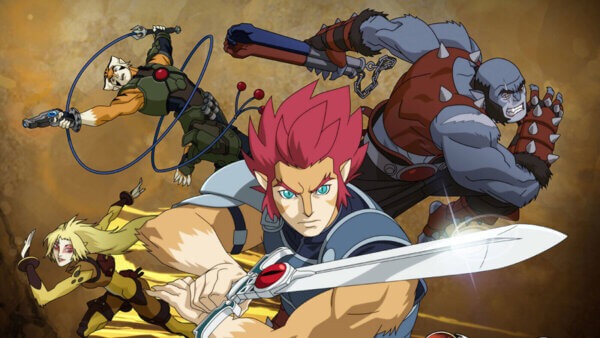
Thundercats (Reboot) – Image © Warner Bros. Animation / Studio 4°C / Cartoon Network (ThunderCats, 2011)
To bring the series to a new audience, as well as pleasing the fans, two storyboard artists were hired to become the showrunners for this anticipated reboot. Ethan Spalding had worked on Avatar: The Last Airbender, and Michael Jelenic was both a storyboard artist and writer for multiple successful Cartoon Network shows such as Ben 10 and Batman: The Brave and the Bold.
With two showrunners with a breadth of experience in storytelling overseeing the production, a studio was also picked to animate the series, and once again, the production would be animated in Japan, more specifically, Studio 4°c. The studio has previously collaborated with Warner Bros. up to this point as they worked on some of the short films as part of The Animatrix and Batman: Gotham Knight, with the animators demonstrating their abilities to create detailed character models and brilliant, choreographed sequences.
The reboot was finally broadcast in 2011, and critics adored it while it garnered some new fans who, after all these years, still hold the show favourably in their hearts. But the show was seen as a financial disappointment, mostly down to two main factors: its high budget (compared to other Cartoon Network shows of the time), and merchandise sales not quite reaching the standard that the broadcaster was expecting. Despite the critical praise and love of some of the new fans, the show was cancelled after just one 26-episode season, potentially ruining a chance for the ThunderCats to return. But nearly ten years later, they did!
ThunderCats Roar – 2020
After the 2011 reboot was cancelled, Michael Jelenic would continue to work with Cartoon Network and would eventually co-develop the superhero comedy series Teen Titans Go, which was a massive departure from it’s more serious incarnation Teen Titans (2003). But this unconventional reboot would eventually spark an idea to give the same treatment to the ThunderCats in an attempt to breathe some fresh life into the property and add a comedic approach to the characters and lore.
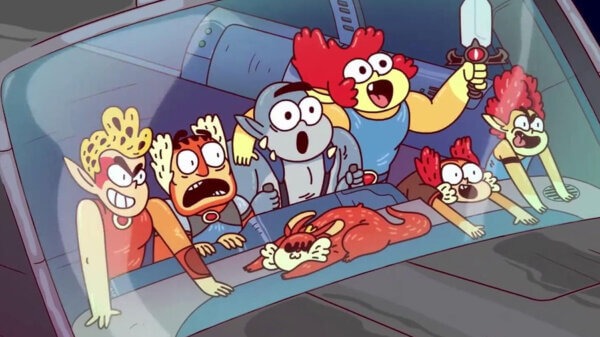
Thundercats Roar – Image © Warner Bros. Animation / Cartoon Network (ThunderCats Roar, 2020)
Both Michael Jelenic and Jules Bass returned to the world of Thundera as consulting producers, the latter of which would be his last credit in animation before Bass’ passing in 2022. The series was developed and produced by Marly Halpern-Graser and Victor Courtright, who previously wrote for comedy shows Be Cool Scooby Doo and Pickle and Peanut.
With such a talented bunch – with a plethora of experience in comedy as well as animation – the show certainly had promise despite taking the iconic characters in a new direction. But while the Teen Titans franchise was successfully accepted when it spun off into Teen Titans Go, the same wasn’t true for ThunderCats Roar, as many criticized the direction of the character designs, comparing them to other shows with a similar look known as the CalArts style that took over social media. And when the show finally premiered at the beginning of 2020, it received mostly negative reviews and criticism as many didn’t like the look of the show as well as the humour in the writing. Therefore, much like it’s predecessor, it was cancelled after just one season.
Dynamite Entertainment’s ThunderCats Comics – 2024 to Present
ThunderCats has certainly had plenty of challenges since the original series ended in 1989, with the attempted reboots. It wasn’t until the heroes found themselves in the pages of comic books by Dynamite Entertainment that they found success with long-time fans once again.
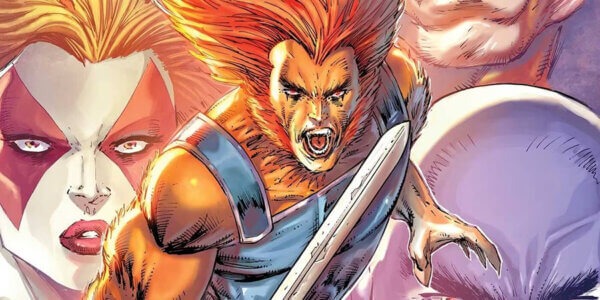
Thundercats Issue No. 1 – Image © Dynamite Entertainment / Warner Bros.
Written by Declan Shalvey – no stranger to the comic book industry and responsible for penning films and shows in comic book form such as Alien by Marvel Comics; as well as writing multiple storylines for Marvel superheroes like Deadpool and The Incredible Hulk. With artwork produced by Drew Moss, who worked on many comics for Disney, their combined efforts were able to continue telling the story of Lion-O from the original series while also adding more depth to the panels and covers when it came to the already iconic designs.
The first issue alone received over 100,000 orders, and the comic has continued to see new story arcs being explored, including a spin-off featuring Cheetara.
Whether you’re a fan of the original eighties classic series, or the rebooted attempts that introduced a whole new generation to the world of Third Earth, there’s no denying the cultural impact that ThunderCats as a franchise has had on popular culture alongside the other heavy hitters of action-packed eighties animated shows like He-Man and the Masters of the Universe and Transfomers. And while it may not have had as many incarnations as its competitors, it has remained a favourite among those who grew up with it, even after all these years.