

INBETWEENS Filmmaker Focus: Steven Fraser
Bristol Animation Meetup (BAM), an initiative of Skwigly Online Animation Magazine, Rumpus Animation and Sun & Moon Studios, has teamed up with Bristol’s Encounters Film Festival and Cube Microplex on July 8th to present INBETWEENS, a special celebration of queer animation cinema.
Curated by local animator Luzie Ilgner, the screening showcases a playful, heartfelt, and thought-provoking mix of animations that either explore LGBTQIA+ themes or are created by queer artists.
Ahead of the screening we had the chance to catch up with one of the featured filmmakers, Steven Fraser – an award winning animator and maker with a special focus on queer themes, mental health and neurodiversity in his work. His film Coming out Autistic (2022) will be part of the INBETWEENS lineup.
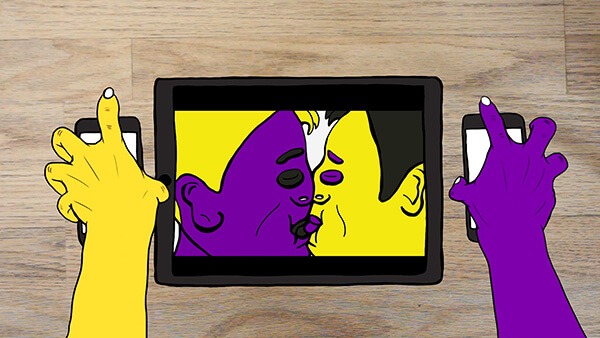
Coming Out Autistic (Dir. Steven Fraser)
Where did your animation journey start and did you always know you wanted to be an animator?
I think so! I was always drawing when I was younger and found it quite interesting. I would just pick up a pencil and draw. I studied Computer Arts in Dundee and that course is really focused on video games. Most of the stuff I was doing at university was more CG focused, but in my spare time I was still drawing. When I started making films, I did not want to use a computer. I wanted it to be hand drawn or puppetry because I did not want to spend all day sat in front of a computer and then go home and do that as well. I realised, for the stories I wanted to tell, I wanted to make things you can touch and hold.
Would you say the story idea inspires the medium you choose to work in, or is it the other way around?
I think it’s a bit of both. I think a lot of the short films I make are very driven by emotion and feelings. These are things that you can’t touch and hold because they are internal and I like to make them external. And that is why the mediums I go for you can touch and hold. It makes them feel a little bit more real.
It feels like your art is very focused around personal experiences and subjects…
Definitely! For Coming Out Autistic I was having conversations with people who identify as LGBT+ and are also on the autism spectrum. I identify as bisexual and I am autistic. I realised there was a connection there. A lot of people I knew were queer and also neurodiverse in some way. I also made a film called Prosopagnosia, which was more like a diary. It was about diaries that I wrote when I was younger. Prosopagnosia means face blindness, which is something that I also live with. I thought ‘instead of interviewing experts and clinical professionals, why don’t I just look at my own diaries’? I was very selective of what I showed, but I felt that was more personal and it would be an easier way to explain what it means to me. I thought people could relate to that. I think there always has to be a personal connection.
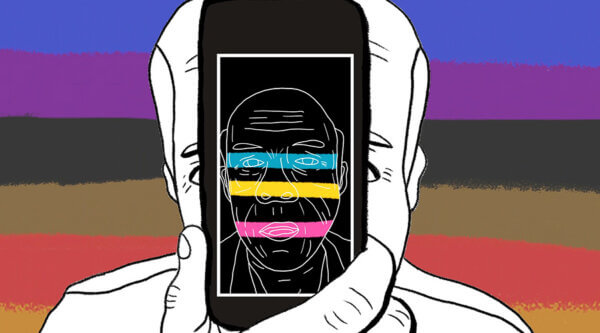
Coming Out Autistic (Dir. Steven Fraser)
What inspires you to set these themes as a focus for your art?
There are definitely reasons. In the past I have seen a lot of films about sexuality or neurodiversity, but they were made by people that were not part of those communities. I always felt like those people were trying to find a way into the story. When I talk about these subjects I can talk about experience or I can talk to other people and I am not trying to get in. As part of the community, I felt the communities could speak for themselves. So that’s why I really wanted to do it. And I just think I find personal stories more interesting.
Let’s have a closer look at Coming Out Autistic. What context did you make the film in?
I just really wanted to make a short documentary, so I interviewed different people about their experiences with coming out to other people as autistic and who also identify as LGBT+ in some way. I just had the idea for this film and it was something I wanted to do. I like interviews and talking to people. Coming Out Autistic was supposed to be made in lockdown. I started it before Prosopagnosia, but I ended up getting funding for Prosopagnosia, finished that first, and then came back to Coming out Autistic.
So this was not your first documentary-style animation?
I have made a couple of documentary films before. I made a film about voice-hearing, so about people who hear voices. It is similar to schizophrenia but they identify as someone who hears voices because there is less stigma around that.
The style of your film is super colourful. Can you tell me a little bit about the creative process behind making the film?
For the colours I was looking at different LGBT+ flags, the rainbow flags are always really colourful. I wanted to make it bright. I think a lot of times when people think of a film about sexuality and neurodiversity, they think it is going to be negative and it is going to look at what the problems are. And there is that, but I didn’t want it to be solely that.
When I was thinking about the colours, I wanted to make them bright and draw people in that way other than making it dark, moody and depressing. So I just looked at different LGBT+ flags and used them as colour palettes for the different scenes.
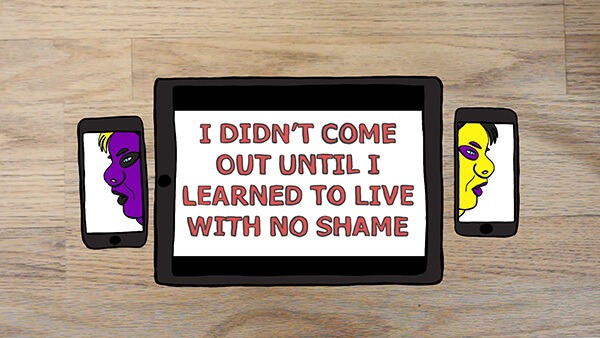
Coming Out Autistic (Dir. Steven Fraser)
I also noticed in the film, that you tell stories not only through interviews but on a visual level there were a lot of social media references, like dating apps for example.
I like the idea of a people coming out online. When I initially envisioned the film, it was going to be animated but I was going to put the animation on a phone and then film the phone. And then I had the great idea of animating things around the phone as well. I thought it would be interesting to put it on a dating app or in a YouTube video. People will be out on dating apps with their sexuality and also a lot of people make YouTube videos about neurodiversity and sexuality. So I thought that would be great way to represent that.
You are doing a lot of interesting work within different genres and techniques and I was just wondering what you are currently up to and what is happening in your artistic life at the moment?
I am doing a documentary lab with Sheffield documentary festival. It’s called Queer Realities, where different documentary filmmakers are pitching their ideas. We have done a series of workshops for the last couple of months. So I will hopefully be working on a feature-length film which is going to have some animation in it as well. It is about letters I wrote when I was younger and I am talking about sexuality in there as well. I want to use animation to bring those letters alive. That is what I am working on at the moment, but it is still in very early stages.
Catch Coming out Autistic as part of the INBETWEENS – Queer Animation Screening at the Cube Microplex in Bristol 8pm on July 8th in association with BAM/Encounters, and at Cardiff’s Chapter Arts Centre 5pm on August 23rd in association with Skwigly/CAF.
To follow Steven Fraser’s work visit stevenfraserart.com and to keep up-to-date with BAM’s current and future events follow @bristol_animation_meetup on Instagram.