
Piripenguins – Interview with Series Creator Massimo Fenati

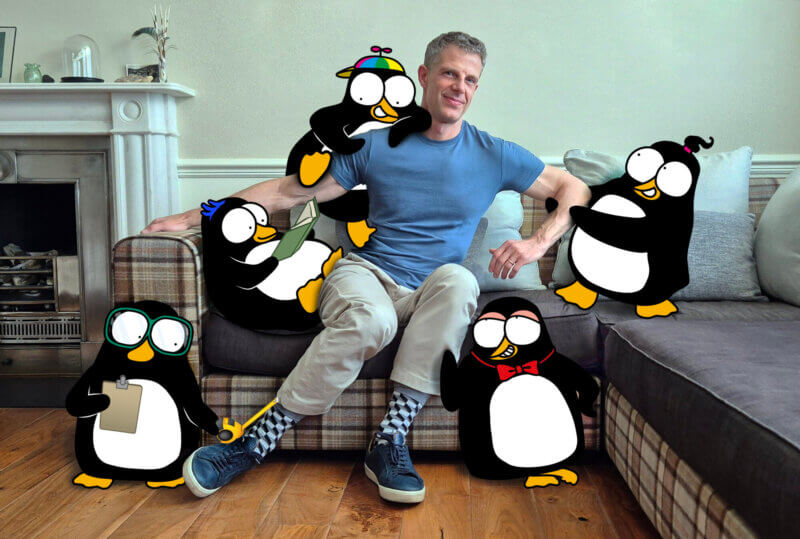
Image provided by Eaglet Films
Nearly four years have passed since I last interviewed Massimo Fenati, who was then discussing his work as the director of the Channel 4 Christmas special The Abominable Snow Baby. And in such a short space of time, he directed Quentin Blake’s Box of Treasures for the BBC, and became a co-founder of Eaglet Films alongside Tess Cuming.
But he is also the creator of his own original series, Piripenguins, which is set to be broadcasted on CBeebies on the 19th May. Set on a giant floating iceberg, the comedy show revolves around five energetic penguins who end up finding themselves in funny scenarios that they try to resolve with sometimes wacky results.
I had the opportunity to interview and catch up with Massimo during his trip to London, where he shared what creators face with developing an original IP, the challenges towards it’s approach to it’s unique blend of animations, and what it was like to have two major broadcasting commissioners to support the production.
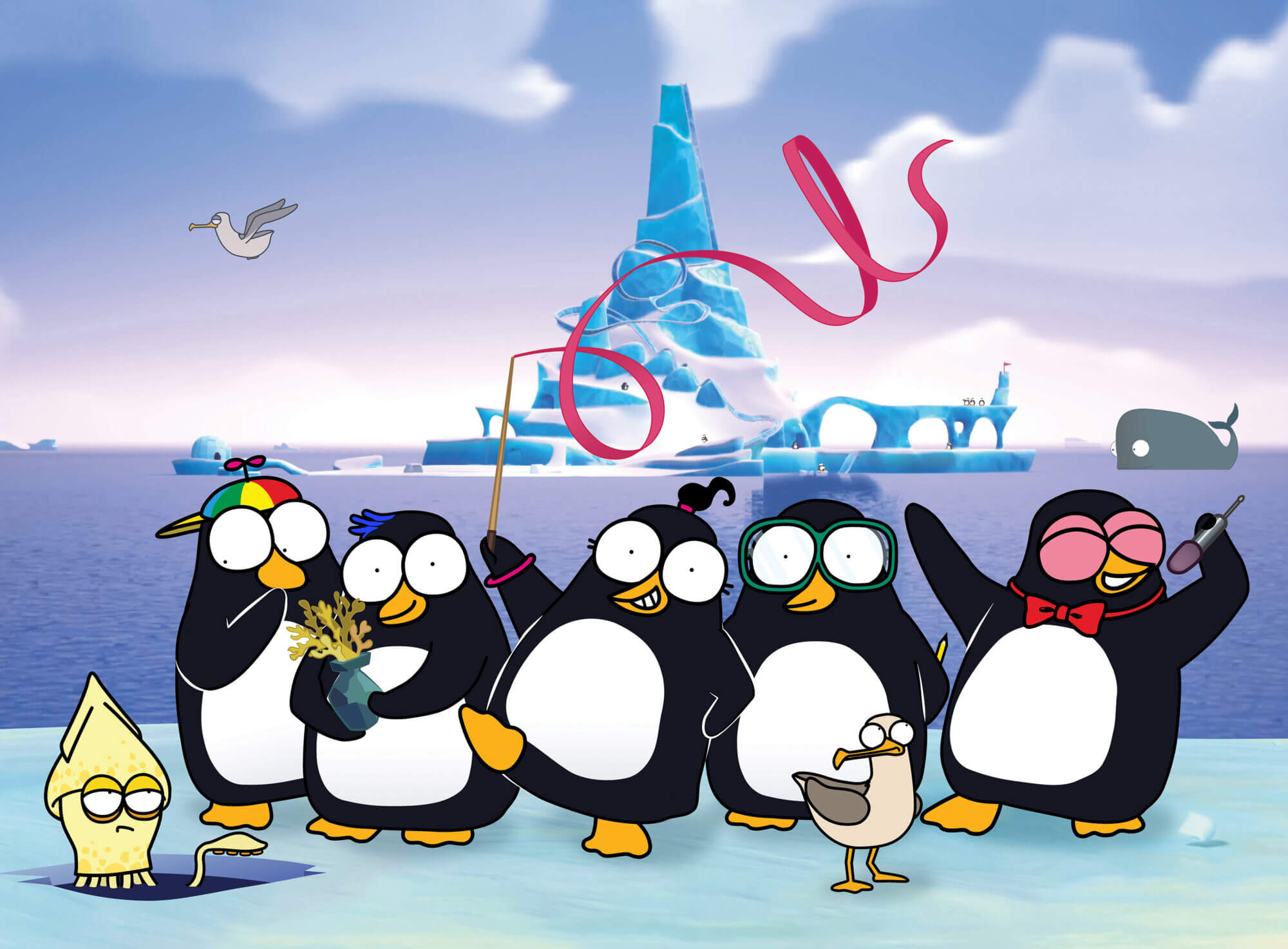
Image provided by Eaglet Films
Since we last spoke before Christmas in 2021 for our interview for The Abominable Snow Baby, you co-founded Eaglet Films with Tess Cuming in 2022. What has that new role been like for you since then?
It’s been quite exciting to run a company because it’s a much bigger project: you need to think about what you want to do and what is more feasible and more achievable, you need to have short term plans and long term plans and those I find quite exciting to be honest.
And we’ve probably been quite lucky as after The Abominable Snow Baby, we got this big commission for the BBC which was Quentin Blake’s Box of Treasures, which is an anthology series adapting his books by into twenty-six minute animations, and thanks to that we gained quite a lot of appreciation from the BBC. It’s been a very successful series (it also won us an RTS Award for Best Children’s Programme last month), I pitched the idea of Piripenguins and the BBC was very interested from the start.
What was the inspiration behind Piripenguins and the vivid stars of the show?
It’s a very personal project for me because a long time ago, we’re talking about fifteen, sixteen years ago, I did a very simple sketch of a penguin on a post-it note that was supposed to be for somebody, and I liked it so much that I was showing it to friends and everybody kept saying “Oh this penguin is fantastic. You should do something with it.” Patricia Hidalgo, Director of Children and Education at the BBC, had just said in an interview that she was looking for a sitcom for children, something that could be for CBeebies but could work as a bridge show, bridging between the typical preschool audience of CBeebies and the school age audience of CBBC. It would need to gather all the preschoolers around the TV but with the option that the slightly older siblings, who wouldn’t normally be that keen on watching preschool programmes, could sit down and enjoy it all the same.
It was an interesting challenge because it had to be the right level of speed and tone. I thought that my penguins could be a good idea for this brief and so I came up with this very simple scenario of a colony of penguins living on an iceberg that floats around the Antarctic Ocean. And just because it’s for the age of children that are just about to go (or just started going) to school, the concept for me is about identity: it’s the age when you suddenly leave your family nest and you realise the world is not you or your siblings and your parents. There’s a lot of human beings of the same age, more or less the same height, and all of a sudden, you have to confront yourself with them and you start thinking: who am I in relation to the?. Am I the same? Am I different?
It’s that kind of moment when children need to work out who they are. So the penguins kind of echo other shows like the Smurfs or the Minions, where the characters all look quite similar to each other, but the personalities are very different. So that’s the concept of the show: you might look alike, but in fact, you are very unique. All of you are very different from each other and that’s beautiful. We want to celebrate that. And so the main five characters all have a prop or something that helps you to tell them apart, but we also pushed for very different voices, very different body language and expressions just to make them as individual and as diverse as possible. It’s become an interesting scenario and even the writers, after the normal gearing up process, understanding and writing the characters became all very easy.
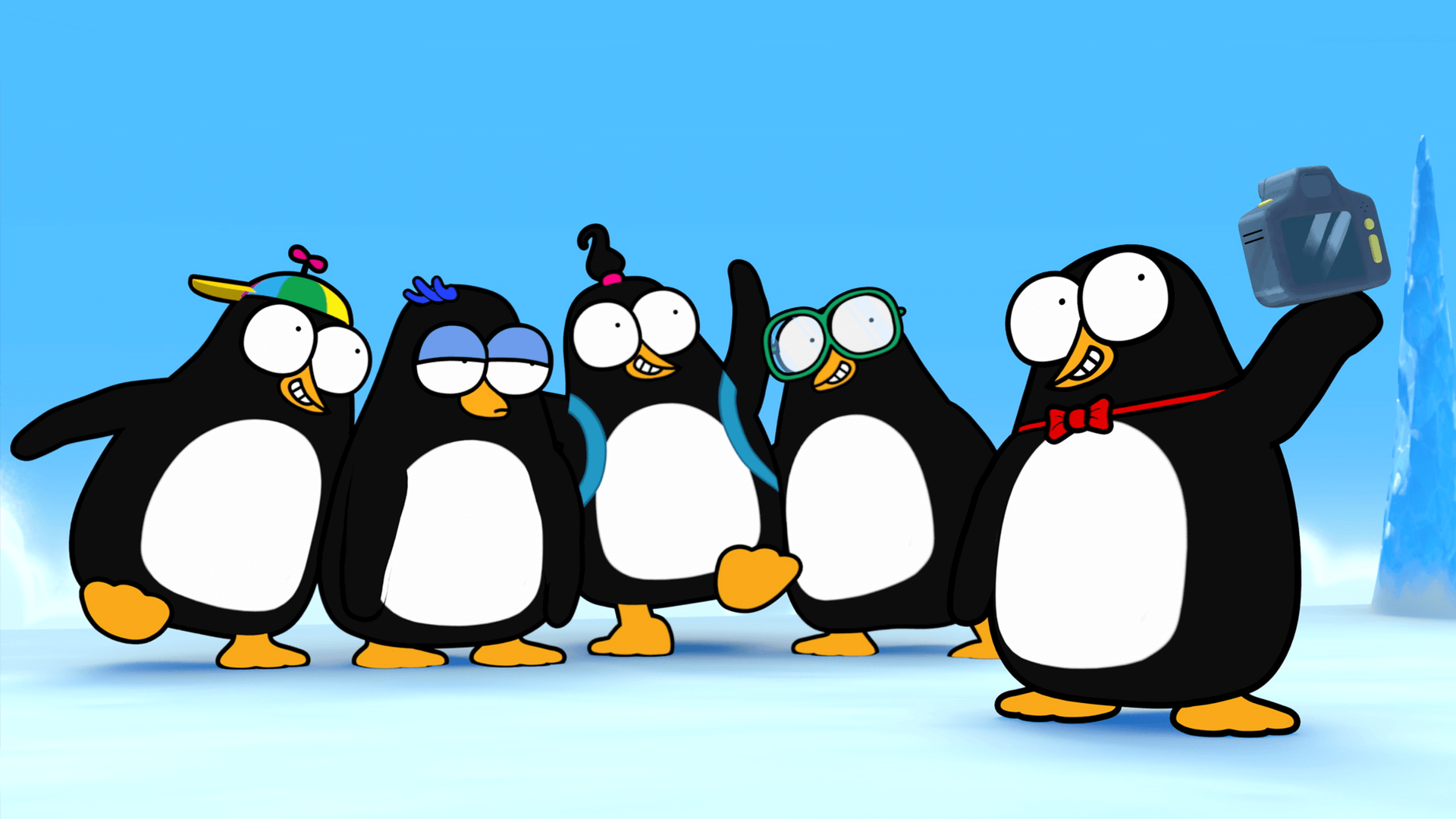
Image provided by Eaglet Films
In our news piece on Piripenguins last year, you mentioned: “opportunities for new ideas to emerge and flourish have been shrinking steadily.” What challenges did you have as its creator and one of the founders of Eaglet Films to get your show off the ground?
Well, it’s interesting because at the moment, I think the industry, and in general the world of television, is going through weird times because of what happened with the pandemic. All of a sudden, animation had a big influx because, obviously, live action TV couldn’t happen so there were more commissions in the animation industry, but things changed back to the status quo after the pandemic, and nowadays streamers have lower profits because people are cancelling subscriptions. That kind of triggers the usual scenario of commissioners feeling that they would rather green-light programmes based on global IP, something that is already recognised and established and I understand it, but I also think at the same time it’s important to keep commissioning brand-new ideas, as innovation is key at times of crisis.
We started with adapting Quentin Blake’s and Terry Pratchett’s works, so we realised that starting from known IP was the way to go because, as a start-up, it would have been almost impossible to pitch something completely new. You need to establish certain credentials to them, to then be able to say “Look, we’ve done that, but we can also create something new, give us a chance and we can prove that the new IP can be just as exciting.” It was a challenge, but we had a very open-minded, keen ear in the BBC.
I was very keen to select a very good team of collaborators, I was probably quite demanding when I started looking for writers, for the studios, for the actors… But in the end, it paid off because the team was absolutely perfect. There is a huge multitude of creatives out there that are very talented, but it’s paramount to find the best fit for every project, find somebody who really gets it and can deliver what I’m looking for. I’m delighted with all my collaborators and I’ve had the best time with the whole team honestly, starting from the writers all the way down to people working on the lightning and the final audio mix. It’s been a fantastic journey for me, I enjoyed every single moment of it.
The show looks as though it has a mixture of animations in it with the characters having a two-dimensional appearance in a three-dimensional space. What were the decisions and challenges that you faced when blending these different animation styles?
The decision was quite simple for me, right at the start, because we tried to turn my original sketch into a 3D character, but it didn’t work. It kind of lost that immediate and streamlined language that I found worked incredibly well in 2D. At the same time, I was fearing that going for a fully 2D show would have been a bit too bland, because the show is set in a world of ice and water and there would have been a lot of white and blue. It needed the richness, the extra texture and light that you can really get only from 3D, so for me it was a no brainer to try and do the hybrid of 2D characters in a 3D world. And I must say that everybody liked it from the start.
Technically, it was difficult because the penguins’ bodies are actually three dimensional although they’re rendered as flat 2D elements without any shading, but the face (meaning the eyes and the beak) is two dimensional, so making these two elements work harmoniously in animation isn’t a slam-dunk. It’s something difficult for 3D animators to get their heads around, it’s quite a process for them at the beginning. But after the standard and expected teething problems of any new production, once they’ve discover the potential and learned the unusual visual language, they started delivering great performances for the characters.
With the show released later this month, what are you hoping that children and grown-ups will take away from it when they watch it for the first time?
The first concept I hope that would be taken will be conveyed by the programme is the one I was mentioning about identity… The second one is about communal living because it’s also about a group of penguins stuck on an iceberg with each other and it will speak to a child stuck in a classroom with lots of other children they haven’t chosen. But how to live together and get along with each other, finding that differences can actually enrich us, is a very important lesson we all need to learn, especially for the difficult times we all live in.
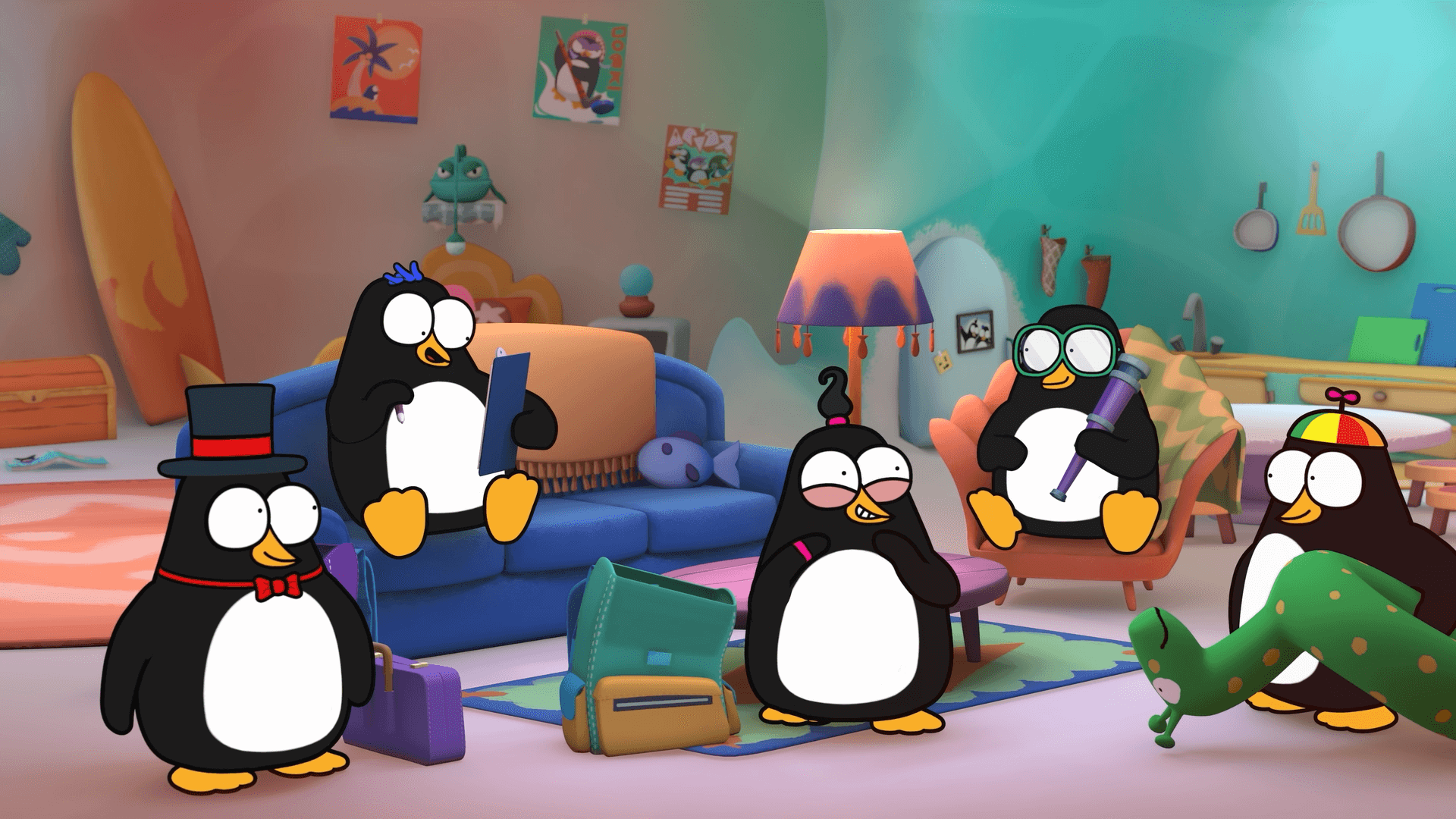
Image provided by Eaglet Films
Piripenguins will broadcast on CBeebies on the 19th May 2025.